
Three Countries, One Identity
Updated: 7 days ago
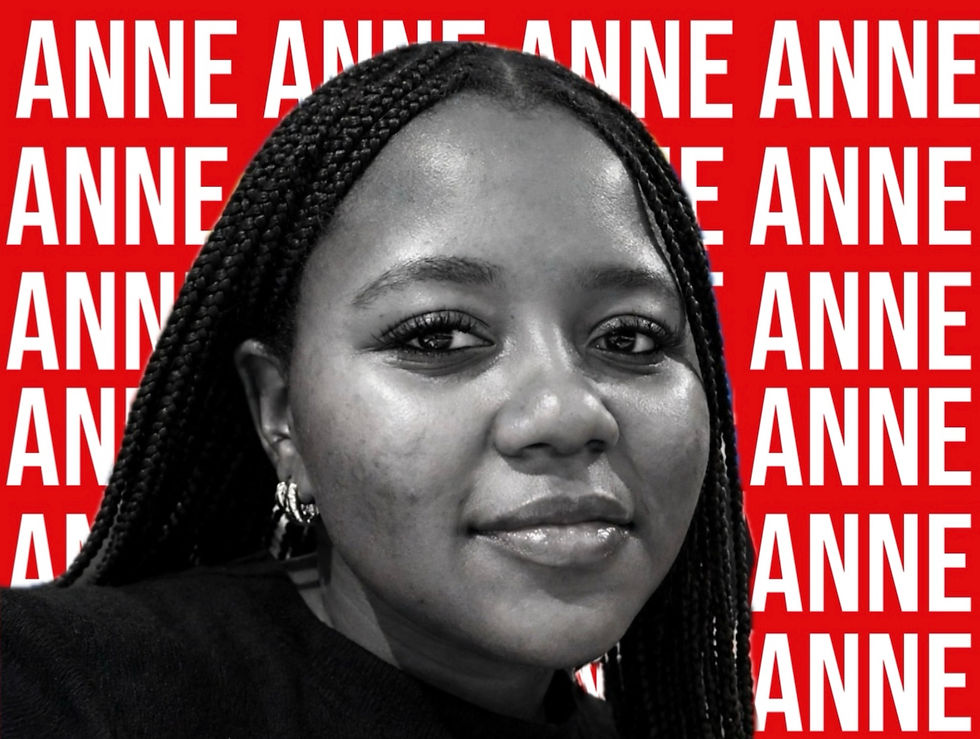
Anne: A Third Culture Kid Connecting the Democratic Republic of the Congo, Kenya, and the United States
Introduction
On July 9, 2026, we spoke with Anne to hear her story.
When people think of the Democratic Republic of the Congo, they often think of conflict.
When they think of Kenya, they picture wildlife and safaris.
And when they think of the United States, politics usually comes to mind.
Anne’s life connects all three.
Born in Chicago to Congolese parents and raised in Kenya, she describes herself as a Third
Culture Kid (TCK), someone whose identity has been shaped by multiple cultures rather
than a single country.
Our conversation wasn’t simply about comparing nations. It was about growing up between
them, and how living across different political and economic systems changes the way you
understand the world.
Growing up Congolese
Although Anne has never permanently lived in the Democratic Republic of the Congo, she
says it has always been home.
Q: Do you still feel connected to the DRC?
Anne:
“Very connected. Even though I don’t get to visit often, family is always coming to see us and
sharing stories. My parents tell us about growing up there, and Congo shaped their lives.
Because of that, it’s always been a big part of who I am.”
Her parents left the DRC for both economic opportunity and political reasons.
Her father studied law in Congo before continuing his education in Chicago. Today, Anne
says, he continues supporting the region by mentoring entrepreneurs, helping refugees, and
encouraging young people across Africa.
Community Comes First
Living between cultures has also shown Anne how differently societies can function.
Q: Do you ever feel caught between American and Congolese perspectives?
Anne:
“Definitely. The United States feels much more individualistic.
In my family, everything revolves around community.
If someone is sick, everyone helps. If there’s a wedding or a
funeral, everyone comes together. Sometimes we’ll have twenty relatives staying at our
house because someone needs medical treatment or is visiting. That’s just normal for us.”
For Anne, that sense of community remains one of the defining parts of Congolese culture.
A Country Rich in Resources
One of the biggest misconceptions about the DRC, Anne believes, is that people only
associate it with poverty.
But he questions who benefits.
Q: What do you wish people understood instead?
Anne:
“People don’t realize how wealthy Congo actually is. So many of the minerals used in
modern technology come from there. The country has incredible natural resources.”
She believes the real challenge isn’t a lack of wealth. It’s making sure that wealth reaches ordinary people.
Anne:
“The problem is corruption and distribution. The people mining these resources often don’t
benefit from them. Instead, much of the wealth stays concentrated among those in power.”
Looking Toward the Future
Despite those challenges, Anne remains hopeful.
Q: Do you think people in the DRC will eventually benefit more from the country’s wealth?
Anne:
“I do think it’s possible. It will take political change and addressing corruption, but Congo is
capable of supporting itself. The people are capable. There’s still a long way to go, but I
don’t think it’s impossible.”
Education Before Everything
When asked what determines a young person’s future, Anne answered almost immediately.
Q: What matters most?
Anne:
“Education. That’s always been the priority in my family. A lot of my relatives have gone
abroad for university and then used those skills to build careers and support others.”
She says education isn’t simply viewed as personal success.
It’s seen as an investment in entire families and communities.
Living Between Kenya and the DRC
Although deeply connected to Congo, Anne has spent nearly a decade living in Kenya.
Her father now works for the Trade and Development Bank, and she attends an international
school in Nairobi.
She describes her daily life as comfortable, but says it exists alongside visible inequality.
Q: What’s everyday life in Kenya like?
Anne:
“You drive past the UN headquarters and beautiful neighborhoods, but then you’ll also pass
informal markets and people looking for work. You’re constantly reminded that you’re living in
a developing country.”
Kenya's Biggest Challenge
Unlike the DRC, Anne says Kenya’s biggest challenge isn’t conflict.
It’s employment.
Q: What do you think is the country’s biggest issue today?
Anne:
“There are so many young people, but there aren’t enough jobs. A lot of graduates struggle
to find work, and much of the economy is still informal.”
She also pointed to the 2024 youth-led protests as an important moment.
Anne:
“I think the government is starting to recognize that young people want a bigger role in
politics. Whether enough changes will happen is another question, but I think young people
are making their voices heard.”
Looking Beyond the Headlines
Throughout our conversation, Anne repeatedly challenged the stereotypes people often
have about Africa.
Q: What’s one truth people should know about the DRC?
Anne:
“It’s much bigger than people think. There are hundreds of languages and so many different
cultures. People should learn more than just the headlines because it’s an incredibly
interesting country.”
She offered a similar perspective on Kenya.
Q: And what about Kenya?
“It’s so much more than safaris and beaches. Nairobi is a huge city where people from
dozens of communities come together. It’s developing quickly, and Africa as a whole has so
much potential.”
Lessons Between Countries
Having experienced three different societies, Anne has also thought about what each could
learn from the others.
Q: What could the United States, Kenya, and the DRC learn from one another?
Anne:
“I think Congo needs stronger institutions and less corruption. Kenya needs to keep listening
to young people. And the United States could learn more about community. Politics has
become so divided that people sometimes forget we’re all trying to solve many of the same
problems.”
Looking Ahead
Anne hopes to study in the United States before eventually helping support entrepreneurs and businesses across Africa.
Inspired by her father’s work, she wants to help young innovators find the mentorship and financial backing they often struggle to access.
She also believes that conversations matter.
Simply giving people the opportunity to hear different perspectives, she says, helps break stereotypes before they become assumptions.
Closing
One of the final things Anne shared was how she sees herself.
Not as someone belonging to one country.
But to three.
A Third Culture Kid.
Congolese through family and culture.
American by birth.
Kenyan through the experiences that shaped her childhood.
Listening to Anne is a reminder that countries are rarely defined by the headlines we read about them. They are understood through the people who live them.
That is why Y4T exists.
By listening to young people around the world, we begin to understand how power actually shapes countries, and how the people living inside them experience it.


Comments